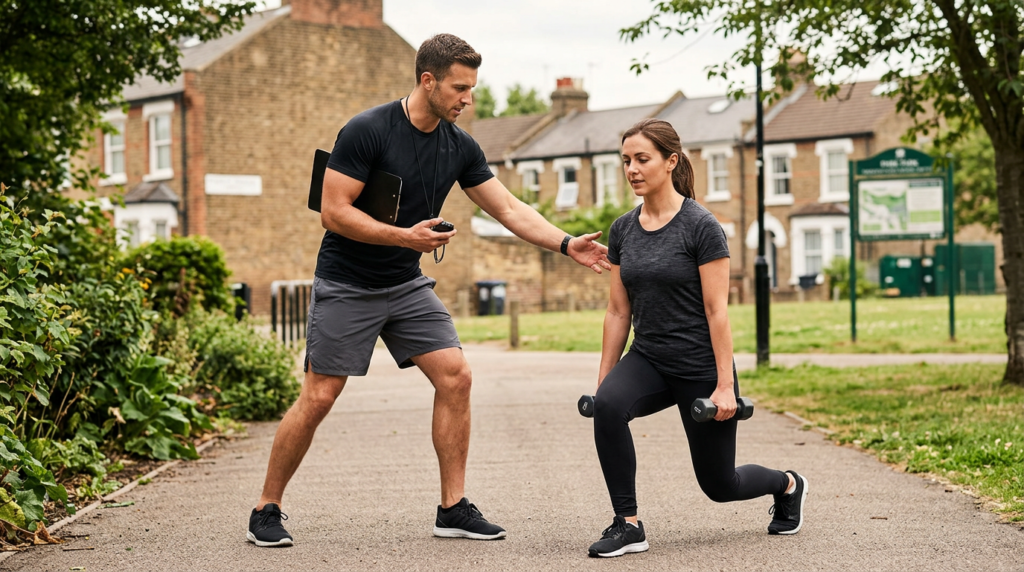
Quick answer: Choose a Walthamstow fitness trainer by comparing how each person assesses you, plans progression, and supports you between sessions. Look for clear screening questions, a plan that matches your schedule and injury history, and coaching cues that make exercises feel safer and more effective. Many good trainers track basics like loads, reps, and recovery, then adjust quickly when life disrupts training.
What To Look For In A First Session
A solid first session should feel like a structured assessment, not a random workout. Some trainers start with questions about your goals, weekly routine, sleep, stress, and any pain or past injuries; ask if they do. They may watch how you squat, hinge, push, pull, and carry, because those patterns can reveal technique gaps, mobility limits, or load-management issues.
Best-practice coaching sounds specific: “brace here,” “shift your weight,” “slow the lowering phase,” rather than generic hype. Ask each trainer to walk you through their assessment, progression plan, and between-session support; compare answers side-by-side. If you’re researching options locally, you may also see resources like a walthamstow fitness trainer page that outlines what’s offered and where sessions can take place.
Red flags include skipping questions about pain, pushing max-effort lifts immediately, or offering a one-size-fits-all routine before seeing how you move. You’re hiring judgement as much as motivation.
Walthamstow Logistics Checklist Before You Book
In Walthamstow, sessions often happen in one of three places: a gym, a local park, or at home with portable kit. Before you commit, confirm the setting and what “session location” actually means in practice (for example, whether you meet inside a gym, outside it, or at a nearby green space).
Travel is the silent deal-breaker. A realistic radius is the one you’ll actually repeat week after week, not the one you can manage once. Check typical travel times from your home or work at the times you’d train, and ask what happens if the trainer is delayed or you’re running late.
Confirm facilities and equipment access upfront. If it’s a gym, ask whether you need your own membership, whether the trainer can bring you in as a guest, and what equipment is reliably available at your session time (rack/bench, dumbbells, cable machine, cardio space). If it’s a park, ask what equipment they bring (kettlebells, resistance bands, suspension trainer), how sessions change in bad weather, and whether there’s a backup plan. If it’s at home, confirm space needs (floor area, ceiling height), what you need to provide (mat, chair, weights), and how progression works if you have limited kit.
Questions To Ask And A Simple Scoring Rubric
Use this mini-script to get useful, comparable answers. Ask the same questions to each trainer and write down what they say:
1) “How do you assess movement and current fitness in the first session?”
2) “How will you progress my plan over the next 4–8 weeks?”
3) “How do you track progress—what numbers or markers do you use?”
4) “What do you do if I have knee/back/shoulder pain during an exercise?”
5) “What support do you offer between sessions (check-ins, plan tweaks, messaging)?”
6) “What would you want me doing on non-training days?”
7) “How do cancellations, holidays, or stressful weeks get handled?”
Scoring rubric (quick and practical): Green flags—clear process, specific examples, and willingness to adjust based on your history and schedule; they explain the ‘why’ without dodging details. Yellow flags—vague answers (“we’ll see”), heavy reliance on motivation-only talk, or no plan for missed sessions. Red flags—dismisses pain, insists on maxing out early, won’t explain progression, or pushes a rigid template before assessing you. This doesn’t guarantee outcomes, but it increases your chances of choosing someone who works methodically.
Matching Training Style To Your Goal Without Guesswork
Different goals tend to respond to different approaches, but what any given trainer does can vary. Fat loss often goes best with strength training plus conditioning you can recover from; ask if they’ll manage intensity so you don’t feel wrecked for days. Muscle gain usually needs progressive overload and enough food and sleep; ask how they’ll plan load increases and deloads. Getting stronger safely often means more attention to technique, rest periods, and gradual jumps in load; ask how they decide when you’re ready to add weight.
Ask how they’ll measure progress beyond the scale. Some trainers use reps at a given weight, waist/hip measurements, photos, resting energy, and consistency markers like weekly steps. Listen for a plan that fits your real week, not an idealised one.
If you have a sport or hobby goal—running, football, cycling—ask how they’ll keep training supportive rather than competing with it (for example, managing leg soreness before a run day). For help sorting your options and setting up a workable plan, KBPT Personal Training East London is a place to get help.