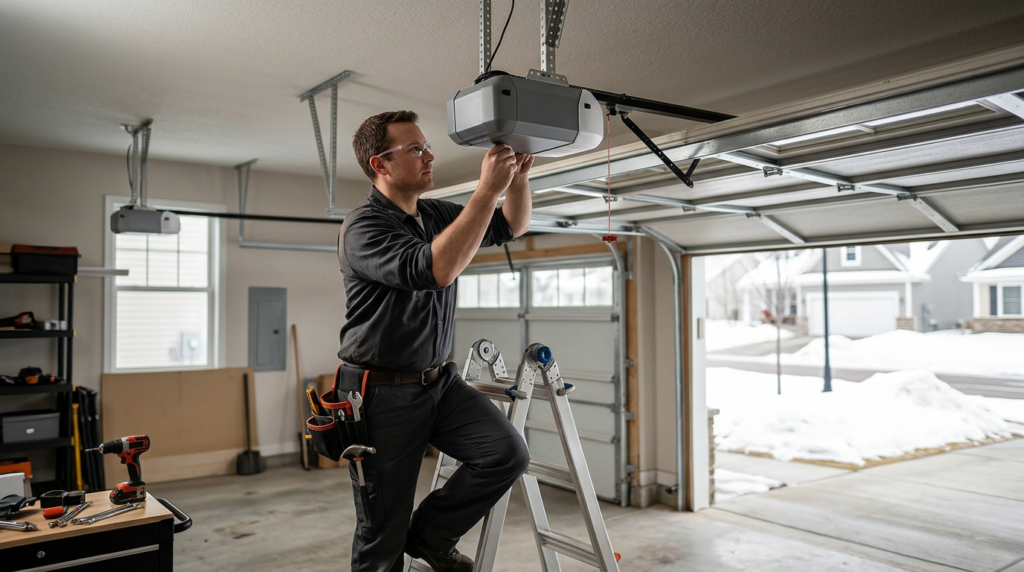
Quick answer: You can get a LiftMaster garage door opener installed in St. Paul by contacting a garage door company that supplies LiftMaster units and performs a full fit-and-safety setup. A solid installation includes confirming door balance, selecting the right drive type and features, mounting hardware into framing, aligning photo-eyes, setting travel/force limits, and programming remotes and keypads so the system runs smoothly and reverses safely.
What Installation Should Include
Installation is more than swapping a motor. The opener has to match the door’s size, weight, and condition, and the rail and header bracket must be anchored into solid framing so the unit doesn’t shift over time. If you’re researching liftmaster openers st paul, use it as a starting point, then confirm directly what brands/models a given company actually supplies and installs.
A thorough install typically covers removing an old unit (if present), mounting the new opener and rail, adding or replacing the door bracket if needed, aligning the photo-eye safety sensors, setting open/close travel limits, and dialing in the force settings so the door reverses correctly. You should also expect basic setup like pairing remotes, programming a keypad if you have one, and verifying the wall control works as intended.
Door balance should be checked first because an opener is not meant to “muscle” a sticky or heavy door. As general guidance, a well-balanced sectional door should stay near waist height (around 3–4 feet off the floor) when you lift it by hand and let go, and it shouldn’t slam shut or shoot up. If it drifts more than a little, the springs or hardware likely need attention before installing a new opener.
Choosing the Right LiftMaster Model for Your Garage
LiftMaster models vary mainly by drive type and features. Belt drives are usually the quietest choice for attached garages, chain drives are common for durability and value, and wall-mount (jackshaft) openers free up ceiling space. Jackshaft units generally require a torsion spring setup and enough side room on the torsion tube, so they’re not a drop-in fit for every garage.
Match features to how you use the garage. Battery backup helps you get in and out during outages. Smart connectivity is convenient for phone control and alerts, but it depends on having a reliable Wi‑Fi signal near the garage. Bright LED lighting helps in darker garages, and a wireless keypad is useful for kids, dog walkers, or contractors.
If your door is unusually tall or heavy (some custom wood doors are), confirm the opener is rated appropriately and that the door hardware is in good shape. Even a quiet opener can sound rough if the door itself rattles on worn rollers or loose hinges.
Signs You Need Replacement Instead of Repair
Some problems are quick fixes: a dead remote battery, dirty photo-eyes, or a loose chain/belt that needs adjustment. Other symptoms point toward replacing the opener, especially if it’s older and parts are harder to find.
Consider replacement if the opener hums but won’t lift a door that is otherwise balanced, if you hear repeated grinding/clicking from the motor/gear area, or if the door reverses for no clear reason after travel limits and sensor alignment have been verified. As general guidance, if you can lift the door smoothly by hand but the opener still strains, stalls, or overheats, the opener may be failing—or the door may be binding only under powered movement—so a full inspection matters.
Also think about safety and convenience upgrades. If your current unit lacks modern safety features or you want battery backup and smart control, replacement can be more practical than chasing intermittent issues.
How to Choose an Installer and What to Ask
Use a simple checklist so you’re comparing apples to apples. Look for a company that can show proof of being licensed (where required) and insured, carries multiple opener models so you’re not forced into one choice, includes a door balance check, performs a documented safety reversal test (photo-eyes plus contact reversal), and provides a written labor warranty.
Before you schedule, ask what’s included: removal/disposal of the old opener, new remotes, keypad programming, and any needed reinforcement at the top section. Ask how they handle common wear items that affect performance—rollers, hinges, and frayed wiring—so a “new opener” doesn’t end up masking an old door problem.
If you’re collecting quotes, contact a few local garage door companies and ask these same questions, then choose the one that gives clear, specific answers. If you need help evaluating options, AA Garage Door LLC can be a starting point for inquiries.