Quick answer: Choose a replacement window company by verifying they measure each opening, specify the exact window line and glass package in writing, and explain how they’ll handle flashing, insulation, and trim. Ask who does the install (employees or subs), what warranties apply to labor and materials, and how they handle lead-safe practices in older homes. Compare apples-to-apples quotes, not just the bottom-line price.
What to Ask Before You Schedule an In-Home Quote
Start with a short phone call before you book time off work. A solid replacement window company near me should be able to explain their process clearly: how they measure, what window brands/series they offer, and whether the installer is their own crew or a subcontractor.
Ask what’s included in the quote besides the window itself. You want to hear specifics about exterior flashing, interior/exterior trim work, insulation around the frame, debris haul-off, and how they protect floors and furniture. If your home was built before 1978, ask how they handle potential lead paint during removal and cleanup.
Also ask what they need from you to give an accurate bid. A true replacement quote usually requires looking at each opening, checking for rot, and noting obstacles like brick, stucco, or unusually deep jambs.
Red Flags That Often Lead to Drafts, Leaks, or Callbacks
Most window problems blamed on “bad windows” are actually installation or scope issues. Be cautious if a company won’t put details in writing, won’t name the exact model/series, or gives a price without measuring every opening. Another red flag is vague language like “we’ll caulk it up” with no mention of flashing or water management.
Watch for overselling upgrades that don’t match your goals. For example, the highest-performance glass can be great, but it won’t fix a window that’s out of square or a sill that’s already deteriorating. If you have visible wood rot, soft sills, staining, or bubbling paint, ask how they’ll repair or replace damaged components so the new unit has a stable, sealed base.
Finally, be wary of pressure to sign immediately. A reputable installer expects you to compare written scopes and confirm details like lead times, scheduling, and warranty coverage.
Quote Comparison Table: Line Items to Require in Writing
Use this as a quick “table” to keep bids comparable. If any line is missing, ask for it in writing before you compare totals.
Required line items: Window manufacturer and series/model; glass package and ratings (U-factor and SHGC); install type (insert/pocket vs full-frame); exterior water management plan (flashing method and materials, and how it ties into existing WRB/siding/brick); insulation method around the frame (low-expansion foam vs other); interior trim plan (reuse vs replace) and any paint/stain responsibility; exterior trim/capping details; debris haul-off and disposal; protection plan for floors/furnishings; change-order policy for rot or hidden damage (rate/allowance and approval process); labor warranty term and what’s excluded; manufacturer warranty basics and who handles service calls.
If you’re comparing multiple homes or elevations, ask them to label each opening (for example, “Kitchen left,” “Bedroom 2 front”) so you can confirm every window is included and the style is correct.
What a Good Installation Day Should Look Like
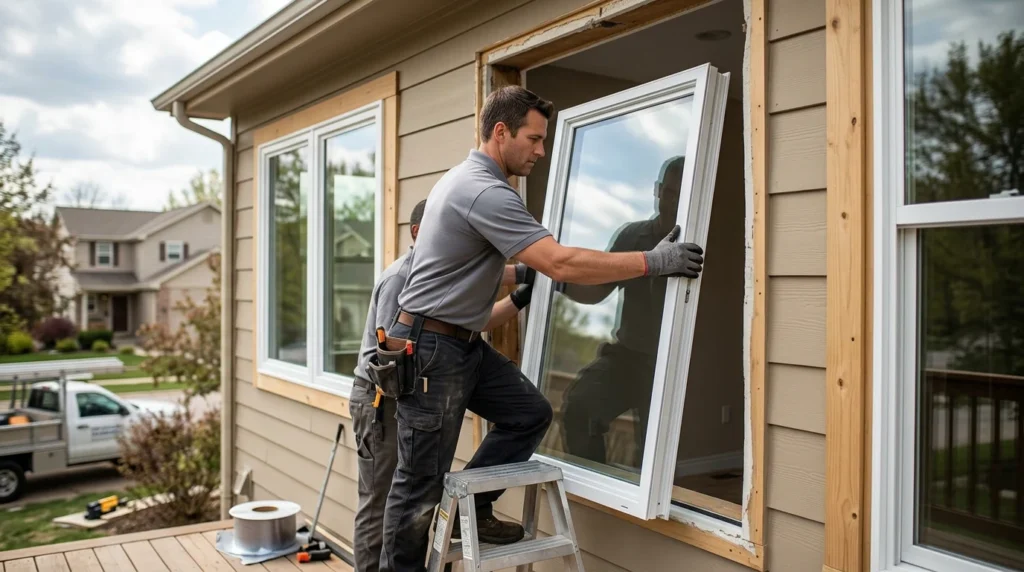
On install day, the crew should confirm the plan room by room, protect flooring, and remove old units carefully to avoid damaging surrounding trim. A clean opening, proper shimming to keep the frame square, low-expansion foam or appropriate insulation, and a deliberate exterior seal are the basics that prevent drafts and water intrusion.
Before they leave, test every window: locks align, sashes move smoothly, screens fit, and you can’t see daylight around the frame. You should also get care guidance—how to clean tracks, what not to use on finishes, and what to watch for during the first heavy rain.
Bring these questions and the line-item checklist to every quote: (1) exact window series and glass ratings (U-factor/SHGC), (2) insert vs full-frame and why, (3) flashing/water-management method, (4) trim/paint responsibilities, (5) debris haul-off, (6) lead-safe plan for pre-1978 surfaces, (7) change-order policy for hidden damage, (8) labor warranty term, (9) who performs the install, (10) how service calls are handled after install. For lead-safe practices in older homes, look up the EPA Renovation, Repair and Painting (RRP) Rule requirements; for why flashing and water management matter, review guidance from building-science resources like the Building America Solution Center on window flashing and water control.