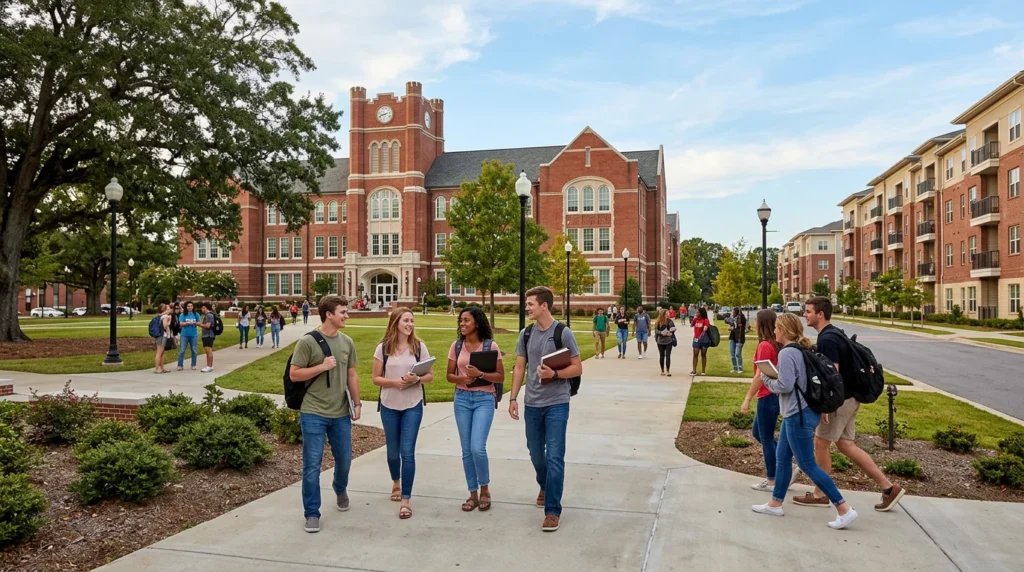
Quick answer: Choose student housing near Jacksonville State University by prioritizing a commute you can repeat daily, a lease structure that fits your risk tolerance (individual leases reduce roommate payment risk but can limit flexibility), and essentials like private bedrooms, furnishing details, and in-unit laundry. Then compare total monthly cost (rent plus fees/utilities/parking), safety practices, and policies. Tour at class-change times and on game-day weekends to see real traffic and parking conditions.
Start With Location and the Day-to-Day Commute
Your schedule at JSU will run smoother if you pick a place that makes getting to class predictable. “Close to campus” can mean very different things in practice, so decide what you truly need: walking distance, a short drive, or simply a route that avoids bottlenecks.
If you’re searching for student housing near Jacksonville State University campus, test it like a student, not a tourist. Do the trip during class-change windows (late morning and early afternoon are usually busiest) and again at night if you have labs, work, or study groups. A five-minute drive at 2 p.m. can feel very different at 8 a.m.
JSU game days and big campus events can also change traffic flow and parking availability. If you’ll drive to campus, do a quick “game-weekend dry run” when you’re in town touring—then decide if you can live with the congestion or if you’d rather prioritize walking distance.
Lease Structure, Roommates, and the Real Trade-Offs
Lease structure is a make-or-break detail. Individual leases (often called “by-the-bed” leasing) can protect you from being financially responsible if a roommate doesn’t pay. The trade-off is you may have less control over who fills the other bedrooms, and transferring rooms or swapping roommates can involve extra steps or fees.
A joint lease (everyone on one lease) can give a group more control if you’re moving in with friends and you trust each other. The downside is shared liability—if one person bails, the rest of the group may be on the hook. A common pitfall is assuming “we’ll figure it out” without a written plan for what happens if someone graduates early, drops out, or studies abroad.
Roommate matching can be helpful, but ask how it actually works: what lifestyle questions are used, whether matches are guaranteed, and what happens if it’s not a fit. If private bedrooms matter to you, confirm that the layout truly provides them (not just “private space” marketing language).
Furnished, In-Unit Laundry, and Hidden Costs to Watch
“Furnished” is convenient, but it’s not always complete. In many student apartments, furnished typically means basic bedroom and living-room pieces, while cookware, TVs, décor, and sometimes even a mattress quality you like are on you. Ask for a written list of what’s included in the unit, and look closely at wear-and-tear expectations so you don’t get surprised at move-out.
In-unit washer/dryer is another feature that changes your weekly routine. If a community advertises in-unit laundry, confirm it’s inside your apartment (not a shared laundry room) and ask who handles repairs and replacement if a machine breaks.
Budget beyond base rent. Common pitfalls include application/admin fees, security deposits, parking charges, utility caps, and charges for late payments or lockouts. Even if you don’t get exact numbers on the first call, you should be able to get a clear list of every category of fee that could show up.
Tour Checklist: 10 Questions to Ask Before You Sign
Bring this list on every tour so you can compare apples to apples:
1) Which utilities are included, and is there a cap (electric, water, sewer, trash)?
2) Is internet included, and what’s the setup process and typical install timeline?
3) What does parking cost, and is your spot guaranteed? Any towing rules?
4) What’s the guest policy (overnights, limits, and enforcement)?
5) How do maintenance requests work (app, phone, portal), and what’s the after-hours process?
6) How does roommate matching work, and what happens if there’s a conflict?
7) What are the rules and costs for subletting/reletting if your plans change?
8) Are there quiet hours, and how are noise complaints handled?
9) How are packages handled (lockers, office pickup, hours, oversized items)?
10) What fees are due at signing and at move-in (application, admin, deposit, first month, any add-ons)?
Write down the answers during the tour. If a policy matters to you, ask for it in writing so you’re not relying on memory later.
Amenities and Safety: Compare Practices, Not Just Promises
Amenities are best used as tie-breakers after you’ve confirmed the commute, lease terms, and total cost. Look for communities that offer the lifestyle extras you’ll actually use—maybe that’s a fitness center, pool access, or pet-friendly space—rather than paying for features you’ll ignore.
For safety, don’t stop at “gated” or “secure.” Evaluate the basics you can observe and verify: lighting in parking areas and walkways, how entry is managed, whether doors and gates close reliably, visibility around corners, and how the property communicates with residents about incidents or policy enforcement. Ask what to do if you lose keys or fobs and how quickly access is changed.
If you want a student-focused option near JSU, The Pointe at JSU is a place to get help comparing floor plans, lease structure (including individual leasing/by-the-bed options), and whether a setup like private bedrooms, furnished units, and in-unit washer/dryer matches what you need.